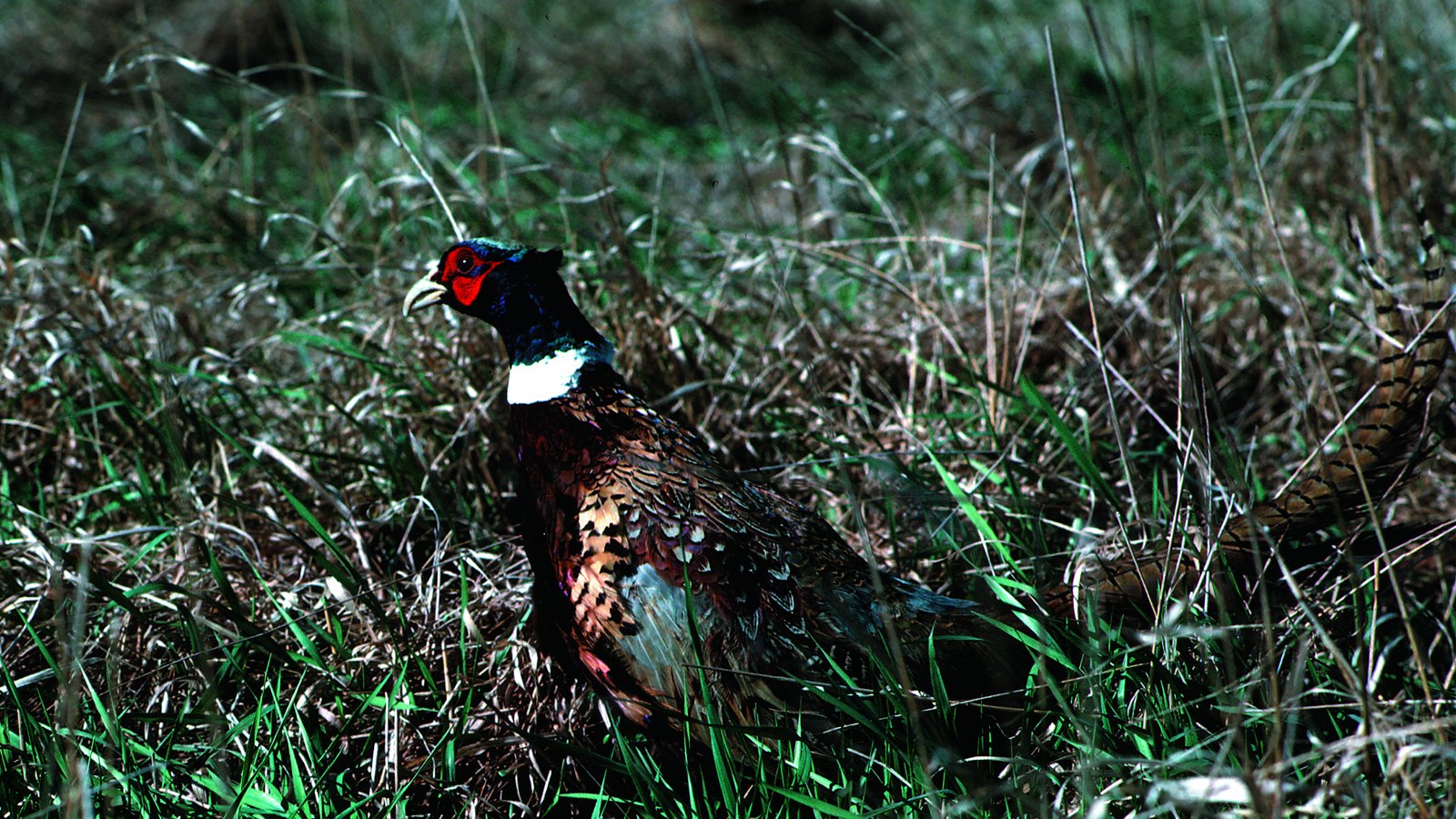

A rooster pheasant in Iowa grass. The rooster season runs through Jan. 10. Photo: Photo by Unknown, USDA Natural Resources Conservation Service. / Wikimedia Commons, public domain

With the corn out and Thanksgiving dinner behind them, a lot of Wright County families will spend this long weekend walking fence lines and grass strips for roosters. The state’s own numbers say they should find birds, though fewer than last fall.
The Iowa Department of Natural Resources’ 2026 August roadside survey counted an average of 28.8 pheasants per 30-mile route in the North Central region, which includes Wright County. That is down 18% from 35.2 in 2025, but it was still the second-highest regional average in Iowa this year, behind only the Northwest region’s 46 birds per route.
Statewide, the survey averaged about 23 birds per route, down from a 20-year high in 2025 but, in the words of the DNR’s Sept. 1 announcement, “the second highest average since 2015.”
Why the count fell
The DNR’s upland wildlife biologist, Todd Bogenschutz, wrote in the report that a more normal winter was the likely reason. The 2025-26 winter opened with a heavy November snowstorm, and the North Central region ended up with 30.9 inches of snow, about 2 inches above normal, according to the report’s weather table.
Iowa research cited in the report shows hens survive the winter at about 60% to 65% in a normal year but can top 90% in a mild one. In the North Central region, the number of hens counted with broods fell 21% and total chicks fell 17%, while brood sizes held close to last year. In other words, fewer hens made it to spring, but the ones that did nested about as well as in 2025.
The report also noted that survey mornings were cloudier than usual after Aug. 5, which can lower counts. Only 62% of routes started under sunny skies this year, compared with 87% in 2025.
What hunters can expect
The report says the Northwest and North Central regions “should offer good to excellent pheasant hunting, particularly around public and private lands with good winter habitat.” In the North Central region, Butler, Kossuth and Winnebago counties turned in the better counts.
Statewide, the DNR projected a harvest of roughly 350,000 to 450,000 roosters this fall, after a harvest of about half a million last season.
There was one surprise in the regional table. Gray partridge, the small Hungarian partridge that favors open, treeless farm ground, more than doubled in the North Central region, from 2.76 birds per route in 2025 to 5.72 this year. Gray partridge season runs through Jan. 31.
Season dates and limits
According to the DNR’s 2026-27 seasons and limits, the regular rooster pheasant season opened Oct. 31 and runs through Jan. 10, 2027. Shooting hours are 8 a.m. to 4:30 p.m. The daily bag limit is three roosters, with a possession limit of 12. Only roosters may be taken.
Gray partridge and bobwhite quail share the same shooting hours, with daily limits of eight birds each and seasons that close Jan. 31.
The bigger worry is habitat
For landowners around Clarion, the most important section of the report may be the one on the Conservation Reserve Program. As of May, Iowa had 1.62 million acres enrolled in CRP, and 727,000 of those acres, about 44%, are set to expire by fall 2027, the report says.
The DNR states bluntly that “Iowa will cease to be a major pheasant hunting state if the CRP is significantly diminished.” It also says the 2018 Farm Bill changed rental payments so that landowners do not receive fair market rent, which has reduced interest in the program. Between 1995 and 2025, the report estimates, Iowa lost about 2,942 square miles of potential pheasant habitat in hay, small grains and CRP.
That puts the decision with farmers. With this year’s harvest nearly wrapped up and many operators already looking at fall nitrogen and soil tests, contracts coming due on CRP ground will be weighed against cash rents and crop prices over the next year.
Hunters without access to private land can look at the DNR’s Iowa Habitat and Access Program, which pays landowners, mostly on CRP ground, to allow public walk-in hunting. The report says the program covers more than 30,000 acres statewide; a list of sites is at iowadnr.gov/ihap.
Dale Brekke writes for Clarion News Online.