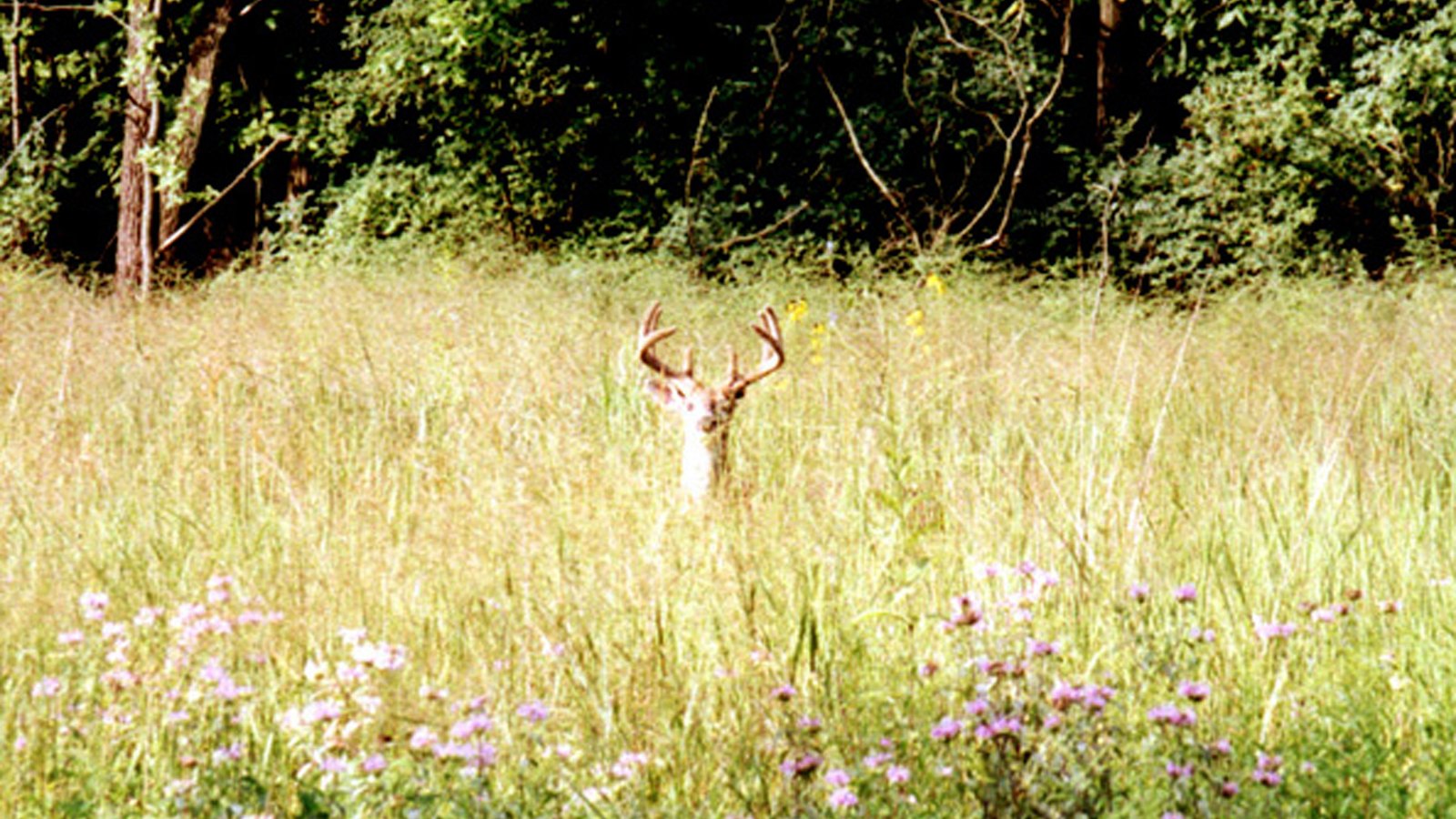

A white-tailed buck in the prairie at Hartman Reserve in Cedar Falls. Photo: Mickeylynne08 / Wikimedia Commons, public domain

Iowa’s first regular gun deer season opens Saturday, Dec. 5, and runs through Dec. 9. The second season follows Dec. 12-20. Between them, the Iowa Department of Natural Resources expects more than 100,000 hunters in the field over the first three weekends of December, and the two seasons usually account for more than half of the state’s annual deer harvest.
For Wright County hunters, opening weekend lands as the last fields come out; Iowa’s corn harvest was 92% done in the season’s final crop report. A few things around the seasons have changed this year.
Two zones now, and where Wright County fits
Iowa now splits deer hunting into Zone A and Zone B. According to the DNR’s season preview, Zone B covers eight counties in northwest and western Iowa: Crawford, Ida, Lyon, O’Brien, Plymouth, Shelby, Sioux and Woodbury. Those counties are moving toward antlered-buck licenses with a limited quota of any-deer tags, and every hunter there has to tag their own deer, with no party hunting.
Wright County is not on that list, so it falls in Zone A, where most rules are unchanged. Zone A and Zone B licenses can’t be used in the other zone. The DNR says 18 western counties in Zone A keep their antlered-buck-only rule during the first gun season, with an exception for landowner-tenant licenses. Hunters who plan to go west for opening weekend should check the regulations booklet for those counties before they leave.
On public land, any tree stand has to carry a metal tag with the owner’s DNR customer identification number, visible from the ground.
Harvest so far and disease
Through mid-November, Iowa hunters had taken nearly 25,000 deer in 2026, which the DNR says is trending close to last year. Harvest is up in the northeast and east-central regions and down elsewhere. Over the past four years, Iowa’s total deer harvest has averaged just over 100,000.
Hemorrhagic disease, which can kill deer in late summer, hasn’t been much of a factor this fall. State deer biologist Jace Elliott told the DNR that average summer rainfall kept the mudflats where disease-carrying midges breed to a minimum, and that the hard freeze in mid-November should end any remaining threat. “So far, we haven’t received any reports of concerning outbreaks anywhere in the state,” Elliott said.
Chronic wasting disease is a different matter, and cold weather does nothing to it. Hunters who want a deer tested can use the hunter submission form on the DNR’s CWD page. Samples go to the Veterinary Diagnostic Laboratory in Ames, and the fee is $25.
Orange, rifles and a plan
The DNR’s safety reminder this year leans on rifles. Jamie Cook, who coordinates the state’s hunter education program, said more hunters are choosing rifles, which carry much farther than shotgun slugs. Over the past three gun seasons, the state averaged about nine hunting incidents involving rifles, around six of them with injuries.
Iowa law requires at least a solid blaze orange vest. Cook’s advice is to wear more than that, check that old orange hasn’t faded, skip shots at running deer, and know what’s behind the animal. Groups that drive and post should write a hunting plan that spells out where each person will be, and stick to it. “You cannot deviate from the plan,” Cook said.
The group drive is still part of the tradition here. Elliott said the two seasons now split about evenly between stationary hunters and groups driving and posting, and that more hunters have moved to the second season because it covers two weekends.
What’s next
Archery season closes Dec. 4 and reopens Dec. 21 after the gun seasons end. Questions about local public ground go to the area’s DNR conservation officer. For more on the fall in the field, see our look at this year’s pheasant counts and more on our Farm & Field page.
Merritt Dowd writes for Clarion News Online.