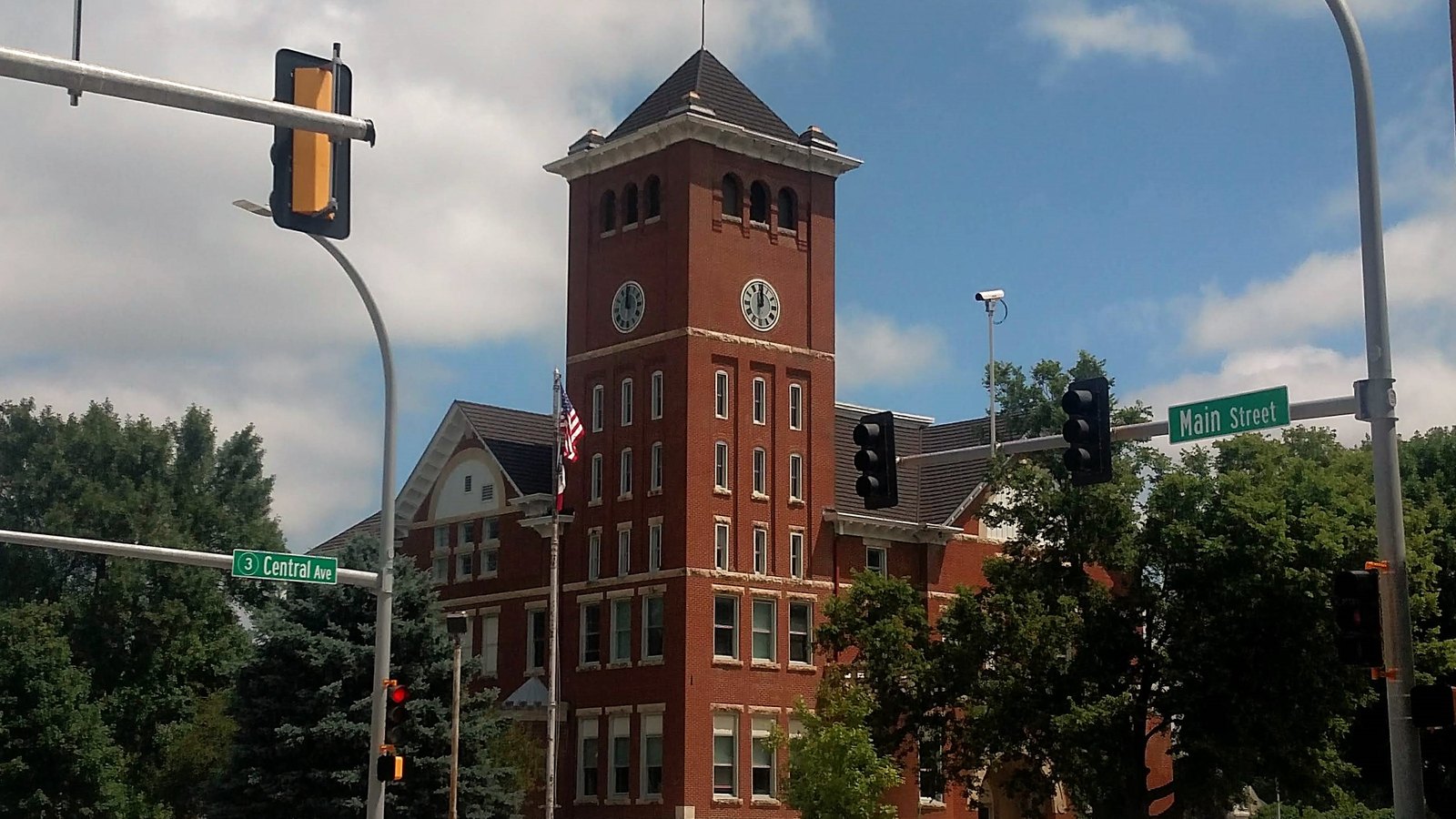

Photo: Brandonrush / Wikimedia Commons, CC0

Wright County has started posting a daily explainer on data centers, and the first entry says something residents had not heard spelled out before: the county is writing a data center ordinance now, before anyone has asked to build one here.
The Data Center 30-Day Informational Series went up on the county website on Nov. 17, on the Economic Development department’s pages. “Did you know county leadership is proactively drafting a new ordinance before any proposals land on our doorstep?” the Day 1 post reads. The county says starting early is meant to make sure growth “protects our land, aquifers, and rural character while bringing new opportunities to our community.”
No data center proposal has been filed with the county, and none was on the supervisors’ agenda this week. The Nov. 16 meeting dealt with water rates, TIF certifications and a livestock site expansion.
What the first posts say
Three days in, the series has covered the basics. Day 2 describes data centers as infrastructure that runs banking, health care, logistics and cloud services, and compares them to a utility. Day 3 gets to the first piece of the draft rules: the county says its proposed ordinance will set “firm decibel noise limits along property lines.”
The post does not say what the limit will be. It says a modern data center typically runs at 45 to 55 decibels measured at the property line, and puts that next to a refrigerator hum at about 50, normal conversation at about 60 and a passing tractor at about 85. It credits a “Wright County Proposed Ordinance Framework” for those figures. The full draft has not been posted.
The same post says setbacks and “closed-loop cooling technologies” keep operations close to normal nighttime sound levels in the country. That cooling claim is one residents may want to ask about, for reasons that came up at a statewide meeting this week.
Water is the bigger question in Iowa
Iowa State Geologist Keith Schilling told the Iowa Nature Summit on Nov. 18 that the state needs a much larger groundwater monitoring network if it keeps drawing data centers and other big water users, Iowa Capital Dispatch reported. Iowa has about 50 monitoring wells, which he called “very poorly distributed.” The Iowa Geological Survey has drawn up a plan for 92 wells that would cost about $3 million over several years.
Schilling said groundwater “is not available at high enough capacity in many areas of the state for this sort of intensive development.” He also said he has seen data centers describe their cooling as “closed loop” even when they use evaporative systems, which send much of the water into the air.
That matters for a county that names aquifers in the first line of its series. Iowa’s largest data center sites so far are in the Des Moines and Council Bluffs areas, including the campuses we wrote about in our profiles of Meta’s Altoona site and Microsoft’s West Des Moines data centers.
How the county got here
The supervisors first took up the subject in July. At that meeting, KIOW reported, a full room heard from people who wanted to bring a data center to the county and people who were against it, and some in the audience asked for a complete moratorium. Economic Development Director Aaron Buckley told the board more public education was needed before the county took the idea seriously, and warned that misinformation could cost the county. The board left open whether to revisit the discussion or start writing rules.
The 30-day series is the county’s answer to the education part. It is written by the county, and it reads like it: the posts so far stress protections and benefits. They have not yet said how much water or power a facility would be allowed to use, what tax breaks might apply, or how much property tax one could bring in.
Any new ordinance would still need a public hearing before the Board of Supervisors could adopt it, as Iowa law requires for county zoning changes. The county has not set a date for a draft. Residents can follow the series on the county website and raise questions during the open forum at the start of each Monday supervisors’ meeting, which is also streamed on Zoom.
We will keep tracking the draft along with other county business, including the Nov. 23 hearing on Agribusiness Park water rates.
Arden Schutt writes for Clarion News Online.