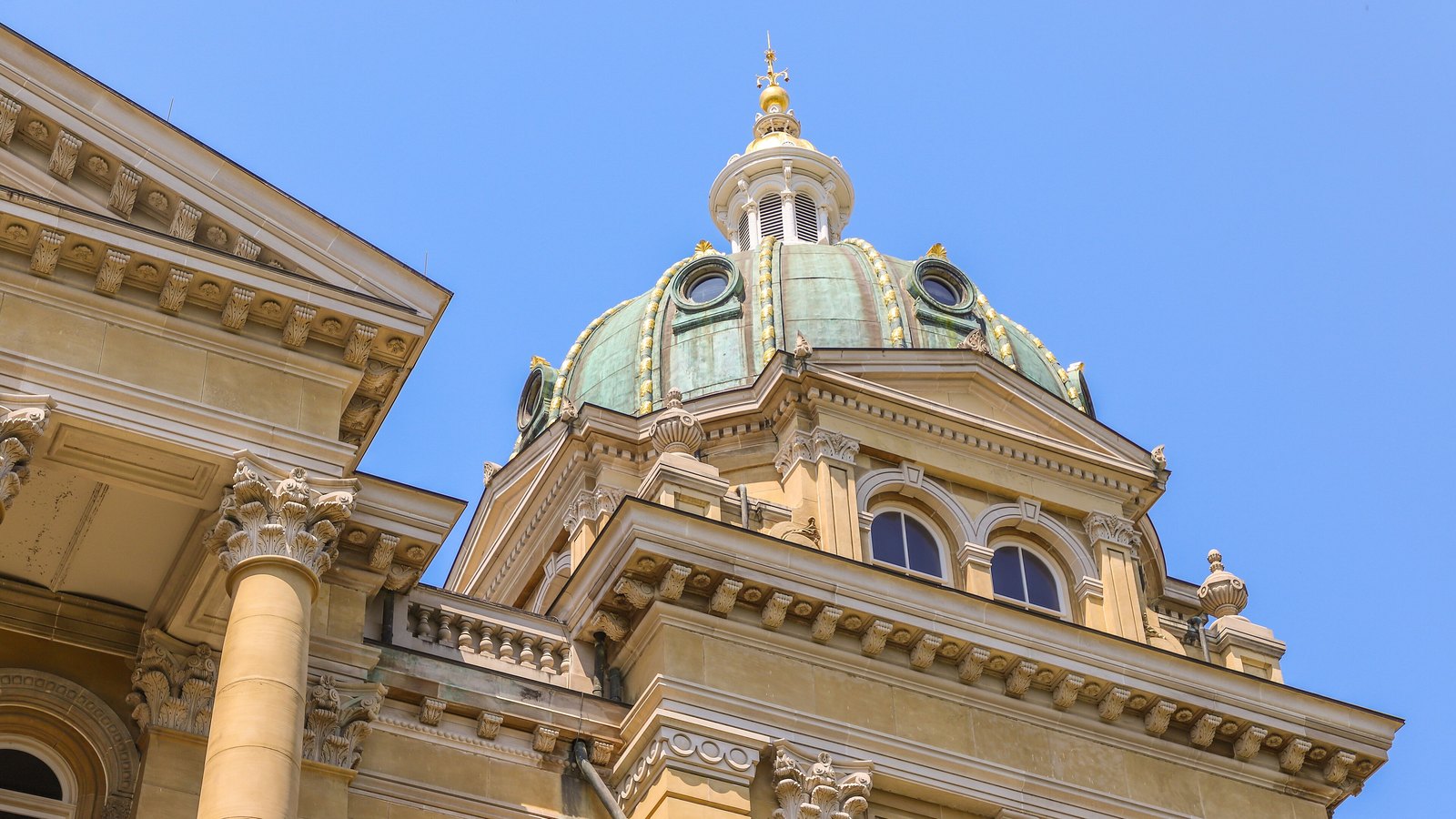

The Iowa State Capitol in Des Moines. Photo: Paul R. Burley, CC BY-SA 4.0, via Wikimedia Commons.

Rob Sand has won the Iowa governor’s race, ending years of Republican control of the office, but Wright County was not the place that put him there.
Unofficial results compiled from the state’s count, and reported in county-level tallies including Electoral Meridian’s Wright County page, showed Republican Zach Lahn with 2,464 votes in Wright County, or 55.2%, to Sand’s 2,002 votes, or 44.8%, with 100% of the expected vote counted. Statewide, those same unofficial figures had Sand winning by a comfortable margin; one widely cited unofficial total put the race at about 55.6% for Sand and 44.4% for Lahn.
The county still leans Republican in federal races, but the governor’s margin here was much closer than recent presidential results. Donald Trump carried Wright County by about 36 points in 2024. Lahn’s 10-point edge in the same county is a big swing toward the Democrat, even if it was not enough for Sand to win the county outright.
Wright County supervisors canvassed the Nov. 3 election on Nov. 10. The state’s own results file was still marked unofficial until the state canvass, a distinction the secretary of state’s election results page is careful about. The county-level story, though, was already clear on election night: Sand will be the next governor, and Wright County voters preferred Lahn.
What that split means in practice will show up in 2027, when Sand’s budget and appointments meet a Legislature that farm counties will be watching on property taxes, school aid and agricultural policy. Local officials in Clarion, Eagle Grove and Belmond will still be writing their own levies. The difference is who is sitting in the office on the other end of the phone in Des Moines.
Greta VanSteen writes for Clarion News Online.