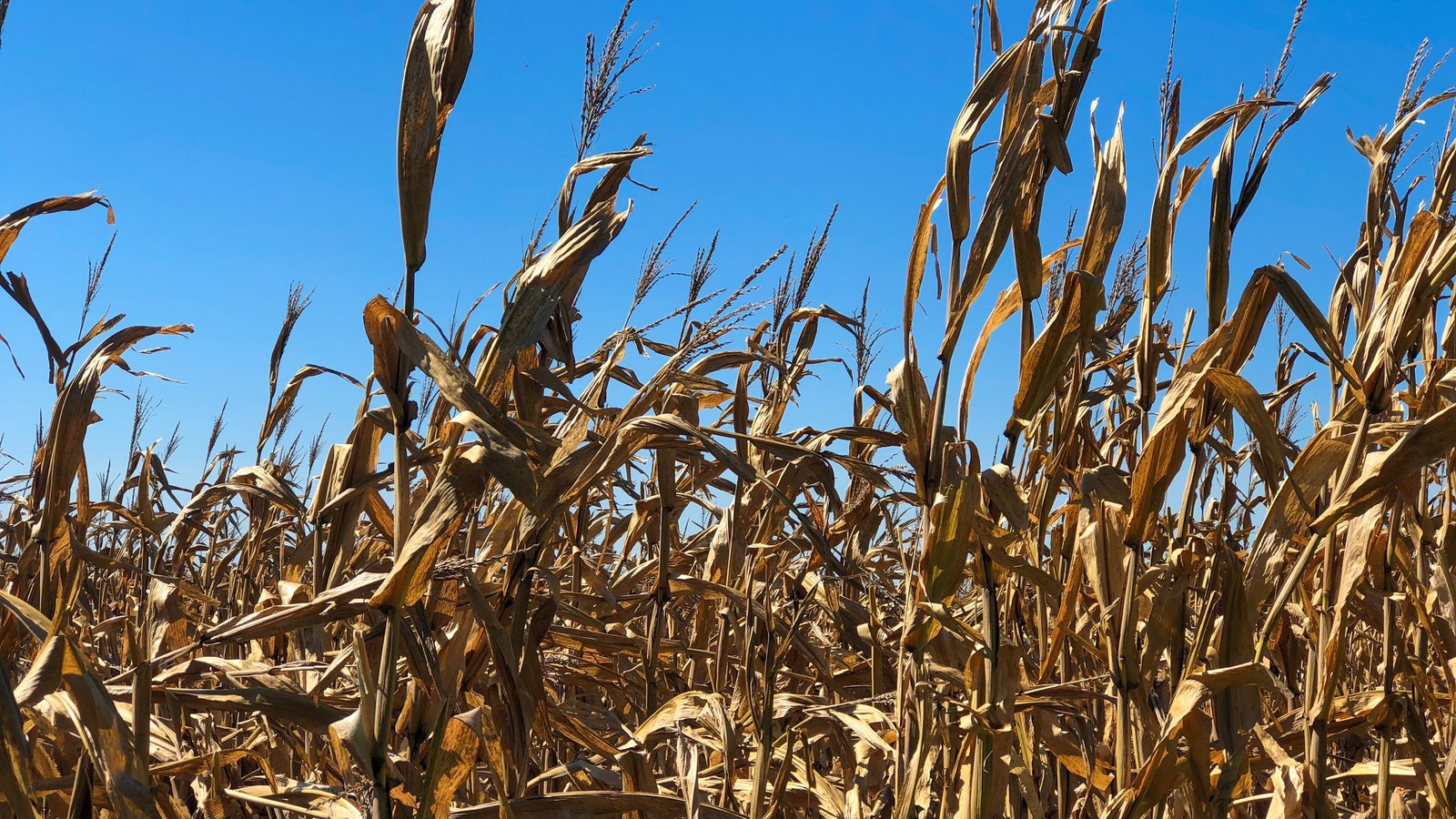

A cornfield at harvest in western Iowa. Photo: Tony Webster, CC BY 2.0, via Wikimedia Commons.

Iowa farmland values look steadier than they did a year ago, but no one who tracks the market is calling for a big jump when Iowa State University releases its annual survey in December.
Rabail Chandio, an Iowa State Extension economist, told High Plains Journal this week that the state’s land market has plateaued after the rapid gains of the early 2020s. In 2026, crop margins and farm receipts recovered some, and additional government payments helped. She expects values to move from small declines toward small increases, “below a 5% change in either direction.”
“We will probably not make any big swings, but instead of small negatives we might go into small positives,” Chandio said. “If we go above that, it would be a surprise to me, and it wouldn’t be the first time I have been surprised.”
That outlook is the one lenders will have in mind when they look at collateral this winter. Land still underpins a lot of operating credit in Wright County, even though Chandio also notes that 84% of Iowa farmland is debt-free. A stable or slightly higher survey number would support those balance sheets. A surprise drop would not, by itself, force sales, but it would change the conversation on renewals.
Ernie Goss, who surveys agricultural bankers from Creighton University, said the period of double-digit annual increases is over. Farmers are cautious, he said, because input costs are still high, but they have not stopped seeing land as a long-term buy, especially when a neighboring tract comes up. Seth Meyer, a former USDA chief economist now at the University of Missouri, told the same Journal audience that federal payments can leak into cash rents and land bids, and that data centers or renewable projects can move prices locally without setting the national market.
Iowa State’s survey, based on reports from farm brokers, lenders and others who watch local sales, has been the state’s benchmark for decades. The December release will be the first full reading on whether 2026’s better receipts were enough to turn central Iowa’s softer 2025 numbers back up.
Dale Brekke writes for Clarion News Online.