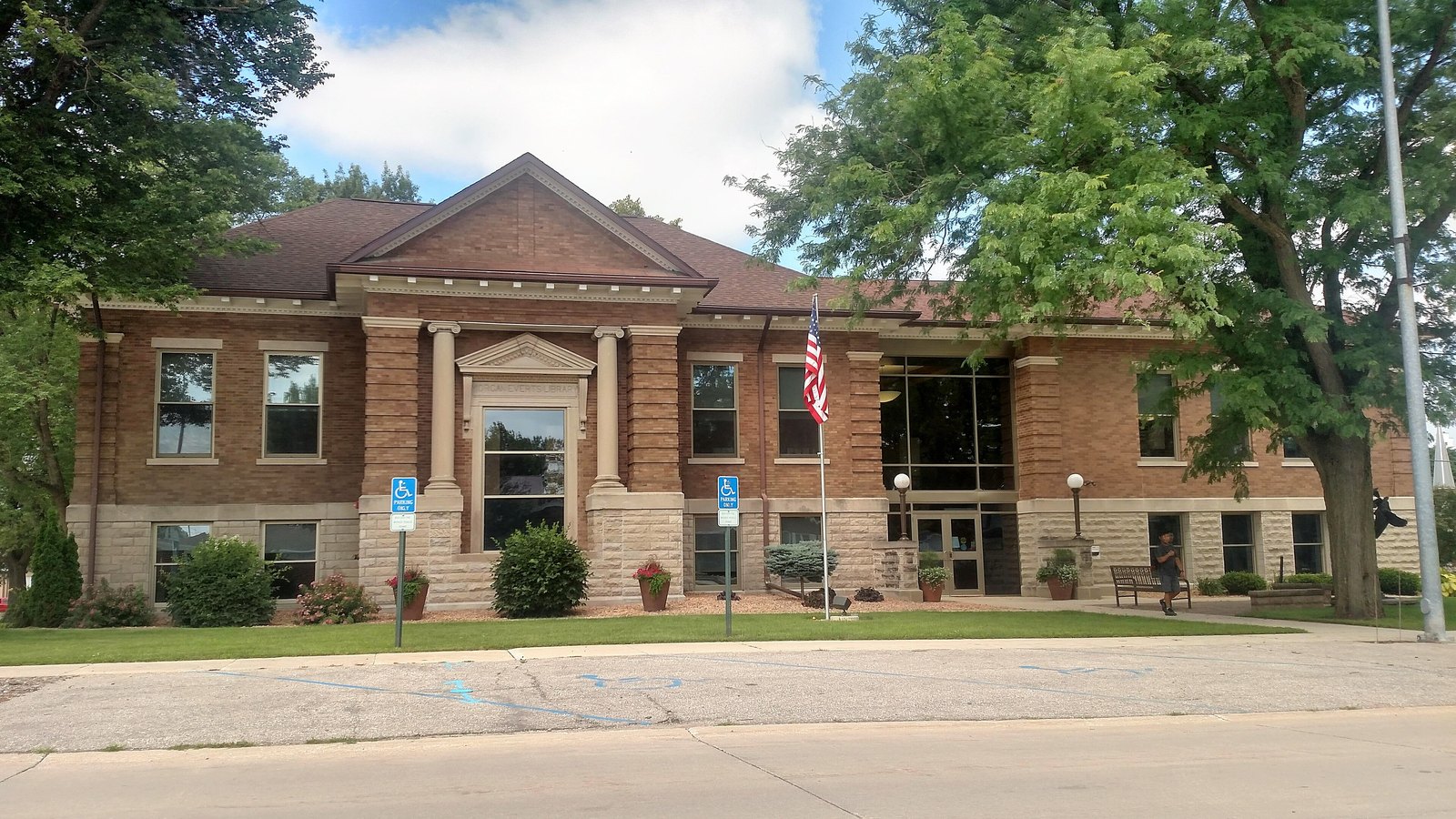

The Morgan Everts Library in Clarion, a few blocks from the courthouse. Photo: Brandonrush, CC0, via Wikimedia Commons.

Wright County’s annual urban renewal report landed on the supervisors’ desk at the end of September with a short list of tax-increment debts still outstanding, and a reminder that those projects are not paid off yet.
According to a report on the Sept. 28 meeting compiled from the county’s records, the auditor presented the filing required for tax-increment financing obligations and reviewed cash on hand, fiscal 2026 expenses and revenues, and ending balances for each urban renewal area. The outstanding debts listed were about $178,000 on RenewTrients, $295,000 on a wind farm loan, $545,000 on a Prestige revenue bond and $1.713 million on an SRF sewer loan.
Added together, that is about $2.73 million still on the books. The sewer loan is by far the largest piece. TIF, in plain terms, sets aside the added taxable value in a designated area to pay for public improvements or to retire the debt used to build them. Until that debt is gone, that increment is not flowing the usual way to the county, cities, schools and other levying bodies.
The board approved filing the report, the meeting account said, even with small bookkeeping discrepancies noted in the presentation. Annual reports like this one are a compliance step, not a new borrowing, but they are one of the few times the remaining balances are laid out in one place.
The same urban renewal tools are in the background of other county business this fall, including the Wright County Agribusiness Park near Eagle Grove, where supervisors have been discussing property sales and water rates. The TIF report does not, by itself, change those decisions. It does show how much of the old financing is still being carried as the county talks about the next ones.
Holly Shafer writes for Clarion News Online.