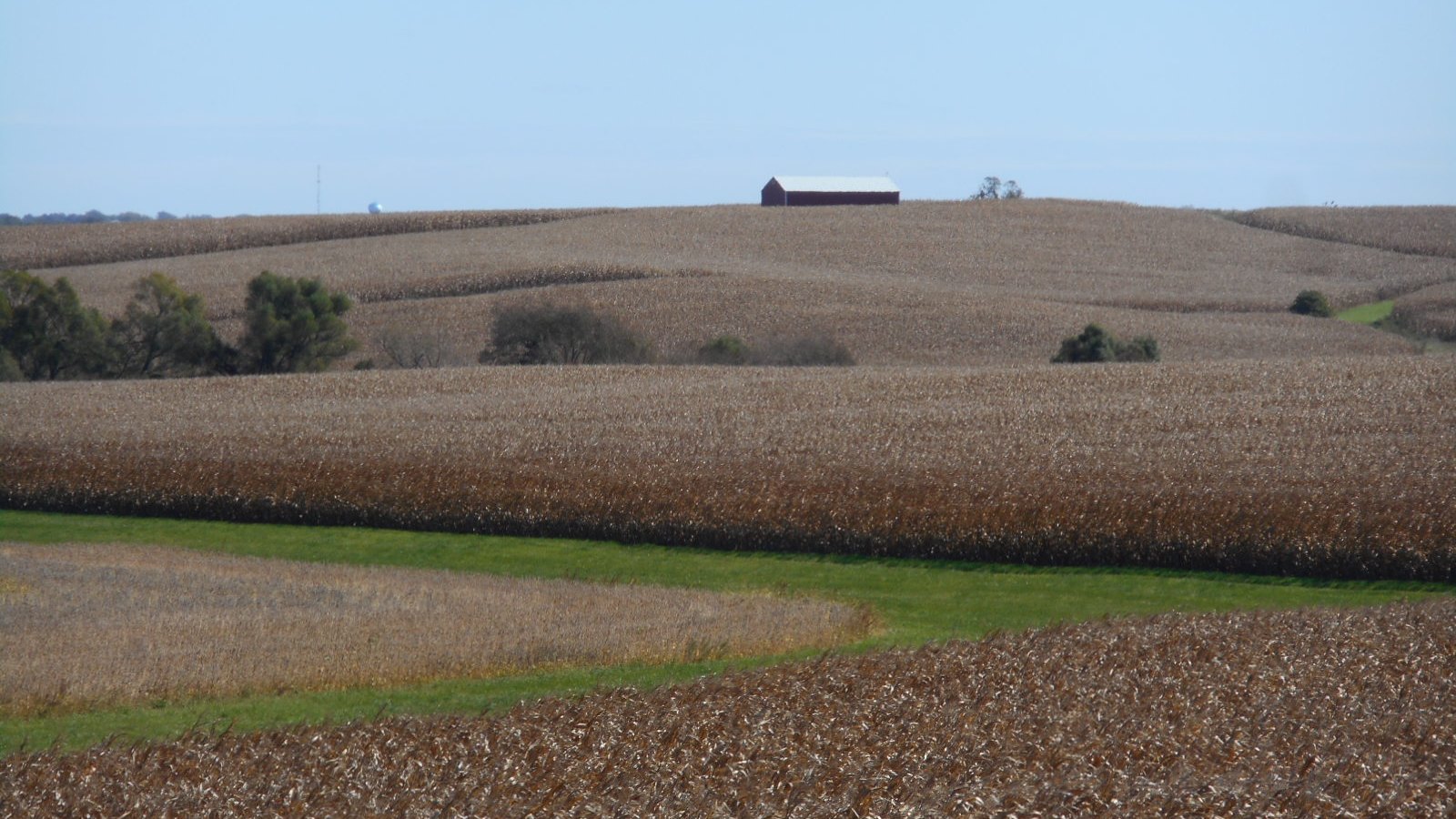

Rolling Iowa cornfields at harvest. Photo: Wuerzele, CC BY-SA 4.0, via Wikimedia Commons.

The planning budgets Iowa State University Extension put out for the 2026 crop year started from an uncomfortable place for a lot of Wright County farmers: average corn and soybean prices were expected to sit below the cost of growing them.
That was the message Wright County Extension carried in its winter newsletter, summarizing the annual Estimated Costs of Crop Production in Iowa report from Extension economist Chad Hart. “The 2026 outlook reflects continued challenging economic conditions, with average market prices for corn and soybeans projected to remain below production costs,” the county office wrote. “Opportunities for profit are expected to be limited, underscoring the importance of careful cost tracking and farm-specific planning.”
Those budgets are statewide planning numbers, not a bid at the Clarion elevator. They assume typical yields, cash rents and input prices, and they are meant as a worksheet, not a verdict on any one farm. A grower who owns more of the ground, locked in fertilizer earlier or has a better yield history can come out ahead of the average. The point of the report is that the average starting point was tight.
Costs have been the harder side of the ledger. Ernie Goss, who surveys agricultural bankers from Creighton University, told High Plains Journal this month that fertilizer and diesel, especially, are still elevated, and that bankers worry equipment dealers and retailers are feeling it as farmers put off big purchases.
There has been some relief on the income side as harvest wrapped up. The U.S. Department of Agriculture’s November crop report, which this newsroom has already covered, held Iowa’s corn yield at a record 219 bushels an acre and raised the soybean yield to a record 65. USDA’s season-average farm price estimates in the companion supply-and-demand report were $4.60 a bushel for corn and $12.10 for soybeans, national averages for the full marketing year, not a local cash bid.
Rabail Chandio, an Iowa State Extension economist, told High Plains Journal that crop margins and farm receipts showed some recovery in 2026, along with additional government payments. That helps, but a record yield at a modest price can still leave a thin margin once rent, seed, chemical and drying bills are paid, especially on a late harvest that spent more time in the dryer.
Hart’s budgets are built so farmers can swap in their own numbers. For Wright County, that is the useful part: the county average may start in the red, but the farm-level worksheet is what lenders and families will actually use as they line up operating notes for 2027.
Kim Sanders writes for Clarion News Online.